
How Lower Back Flare-Ups Develop Without a Single Moment of Injury
- TT Chiro RM

- May 12
- 7 min read

Most people who've had a back flare-up can tell you the exact moment it happened.
Picking up a bag. Awkward twist getting out of the car. One extra rep at the end of a session.
So they spend months avoiding that thing. The bend. The lift. The exercise. Building up a list of "movements I can't do."
Here's the problem. That moment wasn't the cause. It was just the moment your body ran out of capacity. The real story started weeks earlier.
At TT Chiropractic & Remedial Massage in Surry Hills Sydney, this is one of the most common patterns we see in patients who've had recurring back flare-ups. The trigger keeps changing. The cycle keeps repeating. And no one's ever shown them what's actually going on.
So let's fix that.
Back flare-ups rarely come from a single moment of injury.
They build up over weeks as different stressors fill your body's capacity.
Things like prolonged sitting, poor sleep, training load, and life stress.
The "trigger" that finally tips you over (a bend, a sneeze, a deadlift) is often just the last drop in an already-full cup.
Understanding what's filling the cup is the key to breaking the cycle.

Prefer to watch? Trent and Thiago break down the cup analogy in full below.
What Actually Causes a Back Flare-Up?
Think of your body like a cup.
The cup represents your total capacity to handle physical and mental stress on any given day. When the cup is empty, or even half full, your body can absorb a lot. It can handle training. It can handle a long day at the desk. It can handle an awkward movement.
When the cup is nearly full, even a small thing can tip it over. A bend. A sneeze. Picking a pen up off the floor. And that's the moment people experience as the "cause" of the flare-up.
But the pen didn't cause the flare-up. The pen was just the last drop. The cup was already full before that moment.
This reframes everything. It stops you obsessing over the trigger and starts you thinking about what was filling the cup in the first place.
What Fills the Cup Without You Noticing?
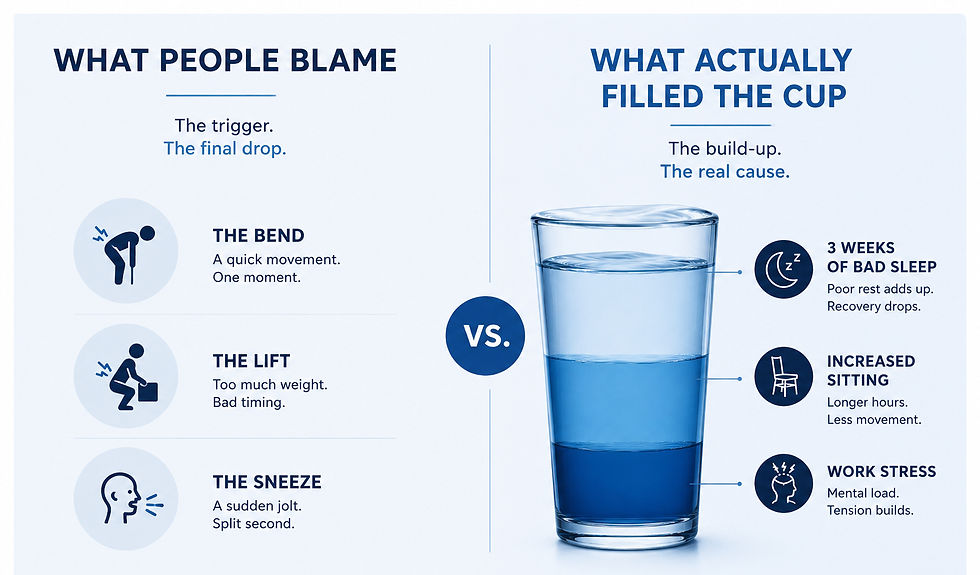
People underestimate how many things contribute. It's not just physical load.
Prolonged sitting. Hours in one position quietly reduces your body's ability to manage load. Even when you feel fine doing it.
Training load. Training is a stressor. A positive one when managed well, but still a stressor. It costs you capacity.
Sleep. A few bad nights can meaningfully reduce your ability to handle physical stress. The same training session that felt fine two weeks ago, when you were sleeping well, might tip the cup over now.
Psychological stress. Work pressure. Life pressure. Research is clear that psychological stress influences how the body experiences load and pain. It's part of the same cup.
So someone going through a stressful period at work, not sleeping well, sitting all day, and still training at the same intensity they always do? Their cup is filling much faster than usual. They often don't realise it until it spills over.
That's the thing about capacity. You don't always feel it depleting. You feel it when it runs out.
Why Does the Last Thing Always Get the Blame?
When the flare-up happens, your brain immediately looks for a cause. And it lands on whatever was happening in that moment.
This is normal. The brain is wired to find patterns. So if you bent forward and your back went, your brain files it: "Bending forward caused this."
So you become cautious about bending forward. Which often isn't the right thing to be cautious about.
This pattern shows up a lot in clinic. People avoiding certain movements for months or years because they associate them with a past flare-up. And that avoidance often makes things worse. Because those movements (bending, rotating, hinging) are things the body needs to be doing.
Avoid them and you reduce your capacity even further. Which makes the next flare-up more likely, not less.
The result is a cycle. Flare-up. Avoidance. Reduced capacity. Another flare-up. And the person can't understand why it keeps happening because they've been "careful."
Careful in the wrong direction.
What Most People Miss About Recurring Flare-Ups
Here's what most people miss. The flare-up is usually the loudest signal in a much longer conversation your body has been having with you.
The cup fills slowly over weeks. Sitting goes up because of a busy work period. Sleep drops off. Training stays the same or increases. Recovery gets deprioritised.
Nothing feels alarming in the moment. There's some low-grade stiffness. A bit more tightness in the mornings. Movements that feel slightly heavier than usual. Most people just push through.
Then the cup spills over.
And here's the part people miss. The warning signs were there before the flare-up. The body was communicating. But because nothing felt serious, it got ignored.
Once you understand the cup, those early signals stop being random background noise. They start being information. And information you can act on.
How Do You Actually Break the Flare-Up Cycle?
You can't always control your work stress. But you can control most of what fills the cup.
You can prioritise sleep. You can move more throughout the day. You can be smarter about training load during high-stress periods. Reducing intensity slightly when life is busier doesn't mean losing progress. It means managing your cup intelligently.
The people who do this well tend to have far fewer flare-ups over time. Not because they're avoiding things. But because they're keeping the cup at a manageable level consistently.
Train smarter, not just harder.

A few useful starting points:
Pay attention to the early signals. Extra morning stiffness. Movements that feel heavier than usual. A general sense of fatigue that isn't just tiredness. These often mean the cup is filling.
When the cup is filling, pull back slightly. Don't push harder. This goes against the instinct of most active people, but it's how you stay ahead of the cycle.
Treat sleep as part of your training program. A few rough nights can quietly drop your capacity.
Notice your sitting pattern during high-stress weeks. It usually goes up at exactly the time you can least afford it.
Stop avoiding movements you've blamed for past flare-ups. Movement is often what your body needs more of, not less.
Track the pattern, not just the trigger. Look at what was happening in the weeks before each flare-up, not just the moment it happened.
Adjust training load based on life load. Same intensity through a stressful month means a much fuller cup.
When Is It Worth Getting Properly Assessed?
Most people in this cycle benefit from getting a clearer picture of what's actually driving their pattern.
It can be worth getting assessed if:
You've had two or more flare-ups in the last twelve months
The triggers keep changing but the cycle keeps repeating
You've built up a list of movements you avoid because of past flare-ups
The flare-ups are getting more frequent or taking longer to settle
You're managing the symptoms but never feel like you're getting ahead of the pattern
A proper assessment isn't about finding something dramatic. It's about understanding what's filling your cup, how your body is responding, and what makes sense for you going forward.
Ready To Break the Cycle?
If you're tired of guessing what caused the last flare-up and bracing for the next one, you don't have to keep doing this on your own.
At TT Chiropractic & Remedial Massage in Surry Hills, our chiropractic care and remedial massage work together to look at the full picture. Movement patterns, load distribution, what's filling your cup, and what your body is doing to cope. Not just where it hurts.
The goal isn't to manage the current episode. It's to break the cycle.
Pain shouldn't be your normal. Let's get you moving again. 💙
FAQ
Can a back flare-up happen without an injury?
Yes. Most flare-ups don't come from a single injury moment. They build up over weeks as different stressors fill your body's capacity. The "trigger" is often just the last drop in an already-full cup.
What does "capacity" actually mean for your back?
Capacity is your body's total ability to handle physical and mental stress on any given day. It's affected by sitting time, training load, sleep, recovery, and psychological stress. When capacity is high, the body absorbs load well. When it's low, even small movements can tip it over.
Why does my back flare up at random?
It's usually not random. The triggers tend to be different each time, but what fills the cup tends to follow a consistent pattern. Look at the weeks before each flare-up, not just the moment it happened.
Should I avoid the movement that caused my last flare-up?
Often, no. The movement was usually just the last drop, not the real cause. Long-term avoidance can reduce your capacity further and make future flare-ups more likely. A proper assessment can help work out what's actually safe for you.
How do I know my cup is getting full?
Common early signals include extra morning stiffness, movements that feel heavier than usual, restricted range of motion, low-grade fatigue, and small niggles you wouldn't normally notice. These tend to show up before a flare-up, not during it.
Can stress really cause a back flare-up?
Stress doesn't directly cause a flare-up, but it fills the cup. Psychological stress changes how the body experiences load and pain, and can meaningfully reduce your capacity. Stressful periods are often when flare-ups happen.
How long does it take to break the flare-up cycle?
It varies, but most people see a meaningful change within a few months once they understand their pattern and start managing capacity intelligently. The goal is fewer flare-ups over time, not perfection.
Follow us on Instagram and Facebook for more tips, updates, and special offers! Let’s work together to correct your posture, ease your back pain, and improve your quality of life.
Head to our booking page or call 0403 579 729 to book your appointment today! We’re located in Surry Hills, just a 5-minutes walking from the Central Station.


